







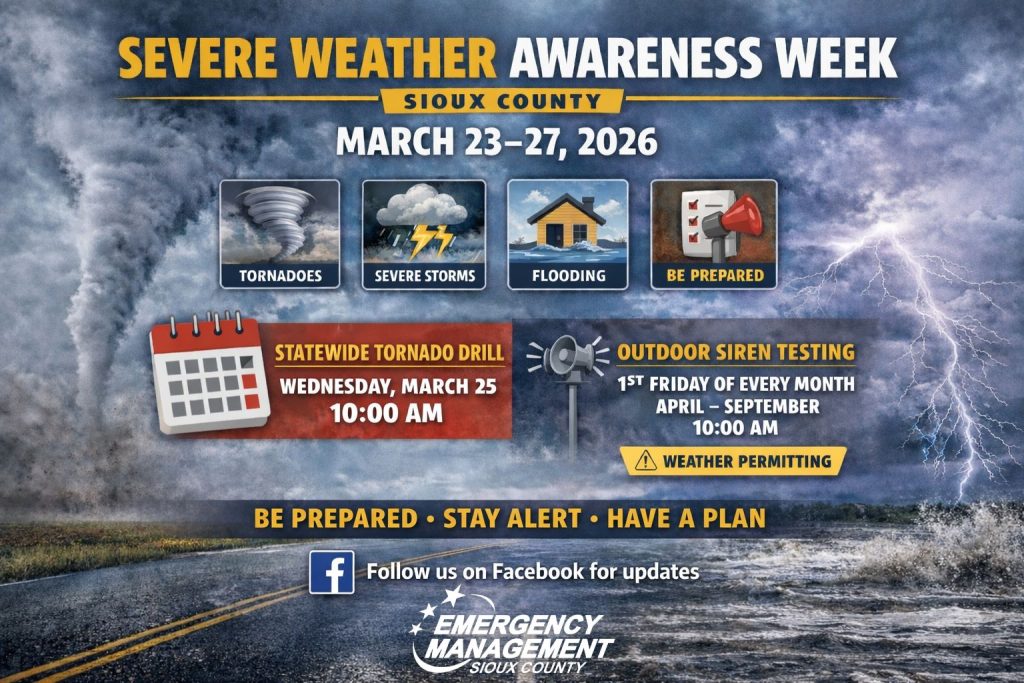
Iowa is observing Severe Weather Awareness Week from Monday, March 23rd, through Friday, March 27th, as state and local agencies encourage residents to review safety plans ahead of the spring and summer storm season.
The annual campaign is a joint effort between the Iowa Homeland Security and Emergency Management, the National Weather Service, and the Iowa Emergency Management Association, focusing on preparedness for hazards like tornadoes, severe thunderstorms, flooding, and high winds.
Officials say Iowa regularly experiences a wide range of severe weather, including tornadoes, flooding, straight-line winds, and derechos—making early preparation critical for residents and communities.
Three Steps to Be Prepared
State officials are encouraging Iowans to take three key steps ahead of the severe weather season:
Be aware: Sign up for emergency alerts through Alert Iowa, use NOAA Weather Radio, or other alert systems
Make a plan: Know where to go and what to do during severe weather
Build a kit: Prepare emergency supplies in case of evacuation
Each day of the week will also highlight a specific topic:
Monday – Lightning Safety
Tuesday – Tornado Safety
Wednesday – Preparedness
Thursday – Hail and Wind Safety
Friday – Flood Safety
Statewide Tornado Drill Wednesday
A key part of the week is the statewide tornado drill scheduled for Wednesday morning at approximately 10:00.
Outdoor warning sirens and NOAA Weather Radio alerts will be activated across Iowa, giving communities a chance to practice sheltering procedures.
Sioux County Emergency Management Coordinator Ryan De Kruyf says the week serves as an important reminder.
Siren Testing Begins in April
In Sioux County, monthly outdoor warning siren testing will begin in April.
Sirens will sound on the first Friday of each month at 10:00 a.m. from April through September, weather permitting.
De Kruyf says those tests help ensure the system is working and give residents a chance to recognize the sound.
Know How You’ll Be Alerted
Officials emphasize that outdoor sirens are just one part of the warning system.
Residents are encouraged to receive alerts in multiple ways, including weather radios, mobile alerts, and local emergency notification systems.
Local Focus on Preparedness
De Kruyf says Severe Weather Awareness Week is also a chance for local agencies and organizations to review plans and communication systems.
Severe Weather Awareness Week serves as a reminder that preparation and coordination are key to keeping communities safe during dangerous weather events.