




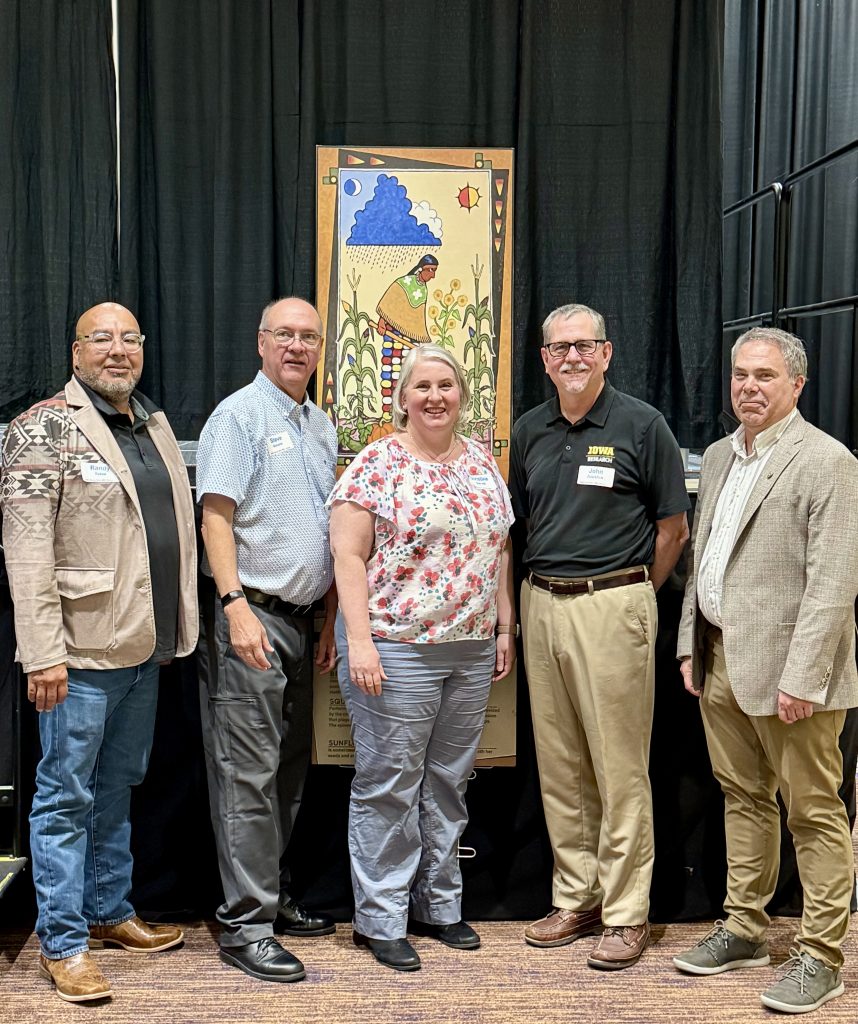
Supporters of the Blood Run National Historic Landmark gathered Wednesday night (May 13) near Larchwood to discuss preservation efforts, Indigenous history, agriculture, and plans for one of Iowa’s most significant archaeological and cultural sites.
The forum was held at Grand Falls Casino and Golf Resort and organized by the non-profit “Friends of Blood Run”.
Organizers say roughly 100 people attended the event, which featured presentations from the state archaeologist, a tribal representative, and more.
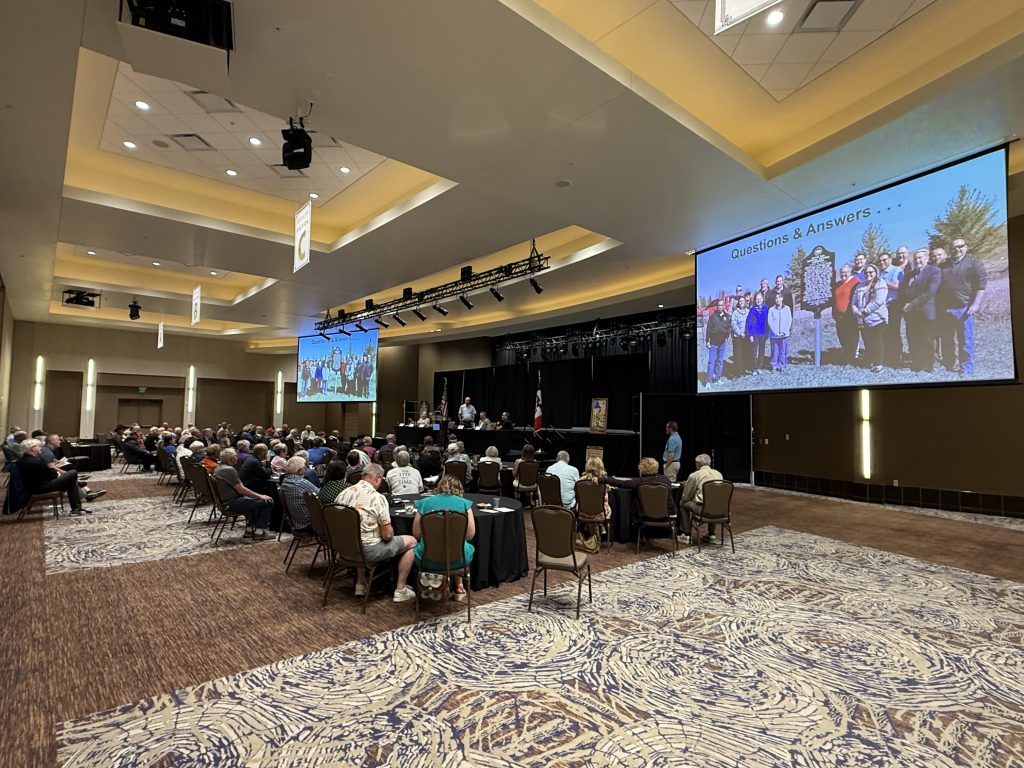
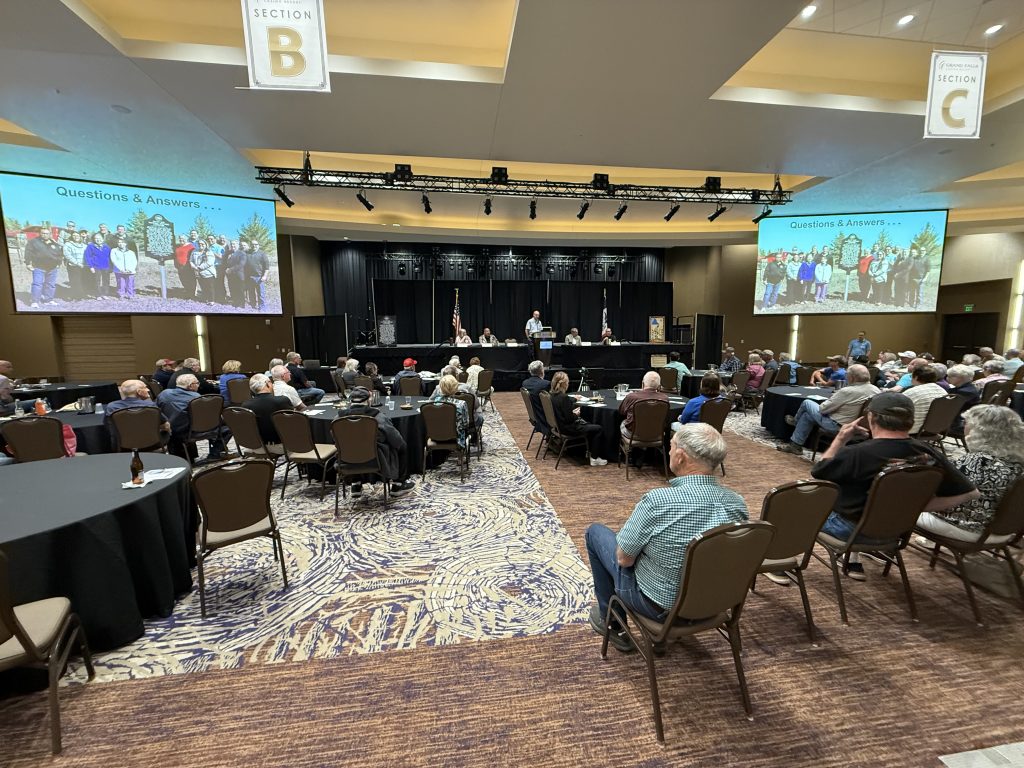
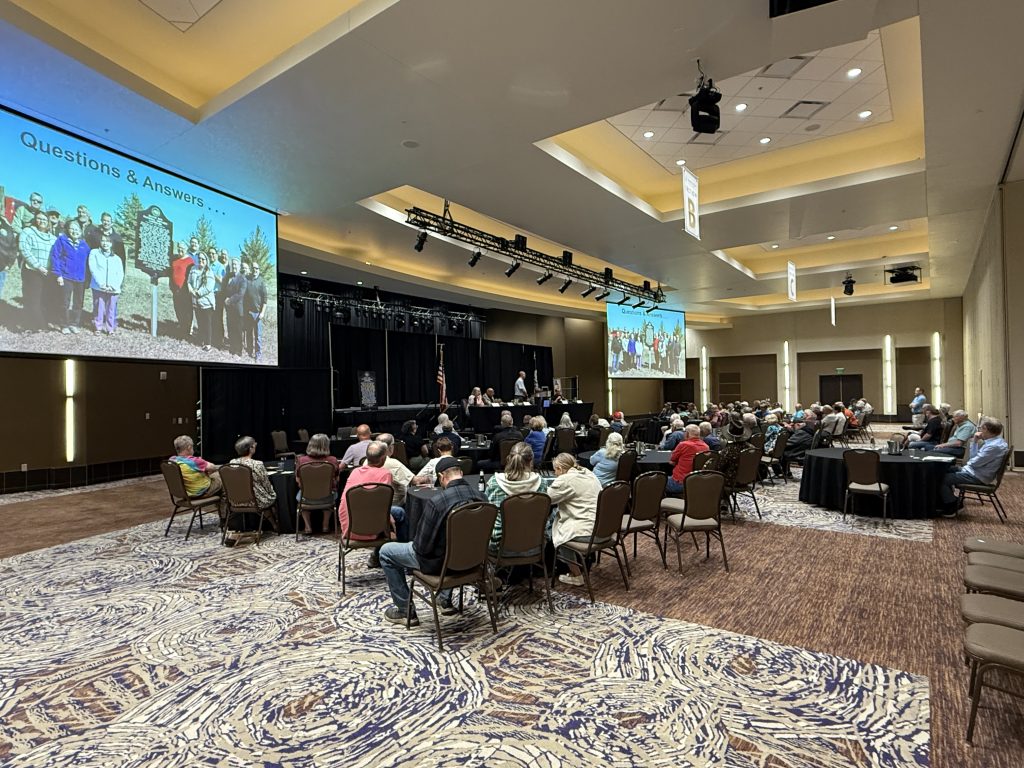
Pictures above are crowd shots taken during the question and answer session / Photo: SCR
A Landmark With Deep History
Blood Run, located along the Big Sioux River in northwest Iowa (Lyon County) and southeast South Dakota (Lincoln County), was once a large Indigenous village and ceremonial trade center connected to the Oneota culture.
Today, the site includes burial mounds, village areas, and other cultural features spread across both states. Blood Run was designated a National Historic Landmark in 1970, and speakers on Wednesday described it as Iowa’s largest archaeological National Historic Landmark.
The Friends of Blood Run is a volunteer advocacy group focused on protecting the historical, cultural, archaeological, and natural resources connected to the landmark and surrounding areas.
Preservation and Future Planning
Different presentations throughout the evening focused on the site’s history, preservation efforts, Indigenous agriculture, and the long-term vision for a proposed Oneota Archive and Research Center.
Randy Teboe, Tribal Historic Preservation Officer for the Ioway Tribe of Kansas and Nebraska, says Blood Run remains deeply meaningful to many Native communities today.
Teboe also discussed the importance of protecting sacred and culturally significant areas while balancing opportunities for public education and access.
During the forum’s question-and-answer session, attendees raised concerns about farming activity over mound areas at the site and asked about possible future land acquisition efforts connected to preservation of the landmark.
Friends of Blood Run President Steve Simons is hopeful that an expansion of protected land becomes a reality.
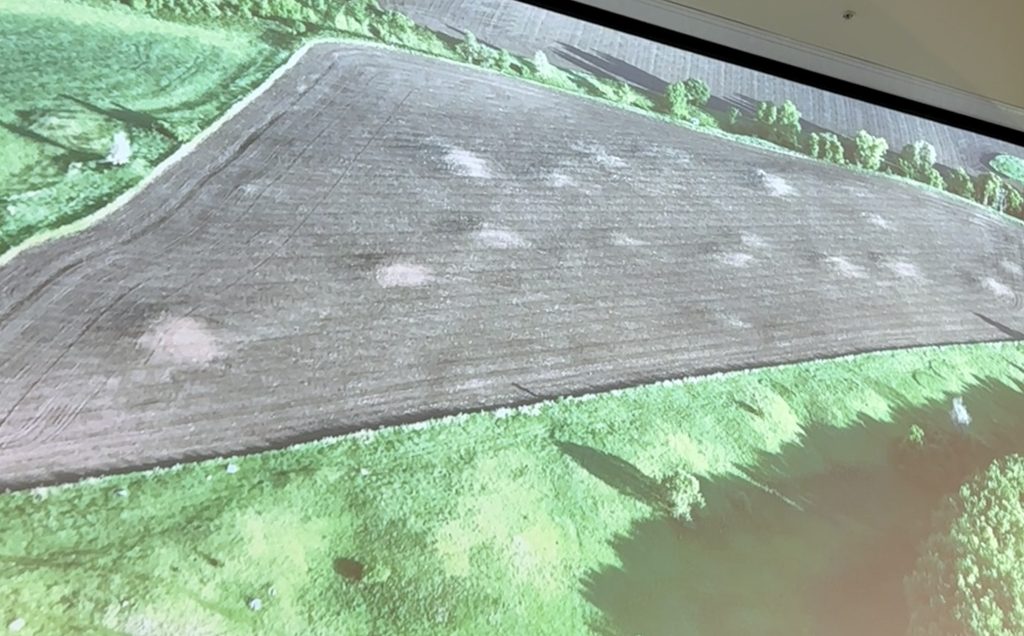
Another audience member asked whether future trails, buildings, or other public improvements could impact the natural and cultural character of Blood Run. Teboe says development can work if sensitive areas are avoided.
Dr. John Doershuk, Iowa’s State Archaeologist, outlined the history of preservation efforts tied to Blood Run, including quarrying activity in the 1980s that exposed human remains and intensified calls for protection of the area.
Doershuk says the site’s significance deserves broader statewide recognition and investment.
Indigenous Agriculture and Culture
Another major focus of the forum centered on Indigenous agriculture and food systems.
Dr. Christina Gish Hill of Iowa State University discussed how Indigenous communities developed sophisticated agricultural practices in the region long before European settlement, including seed selection, intercropping, and sustainable soil management techniques.
Hill says many foods central to modern American diets trace directly back to Indigenous agricultural innovation.
Looking Ahead
State Senator Jeff Taylor (R-Sioux Center) attended the forum and said Blood Run’s importance extends beyond northwest Iowa.
Taylor noted that any future state funding would require specific proposals and would likely involve partnerships between local supporters, private donors, and the state.
Taylor says he hopes to continue helping connect organizers with state officials if specific proposals related to preservation or future development are brought forward.
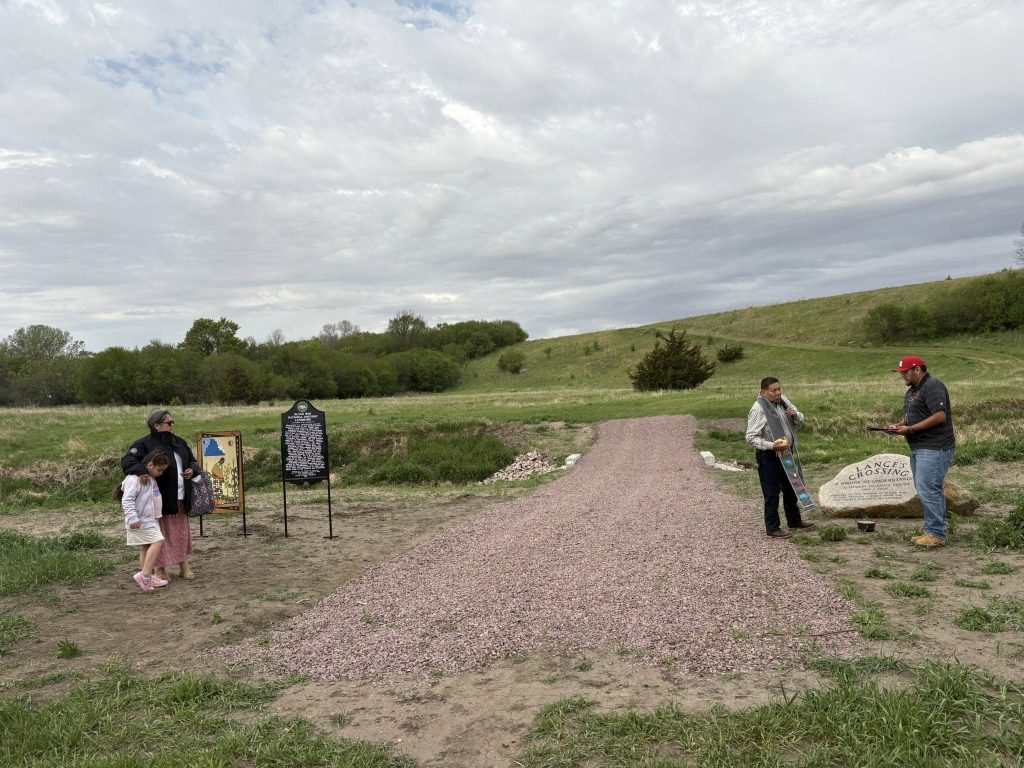
State Representative Skyler Wheeler (R-Hull) attended a ceremony for longtime Blood Run advocate and artist Lance Foster on Thursday. Foster, who passed away in 2025, had a “crossing” dedicated in his honor. In a social media post, Wheeler thanked local volunteers and supporters who have worked to preserve and promote Blood Run.
Organizers say they hope increased public awareness, partnerships, and future investment will continue to expand educational and preservation opportunities connected to Blood Run.