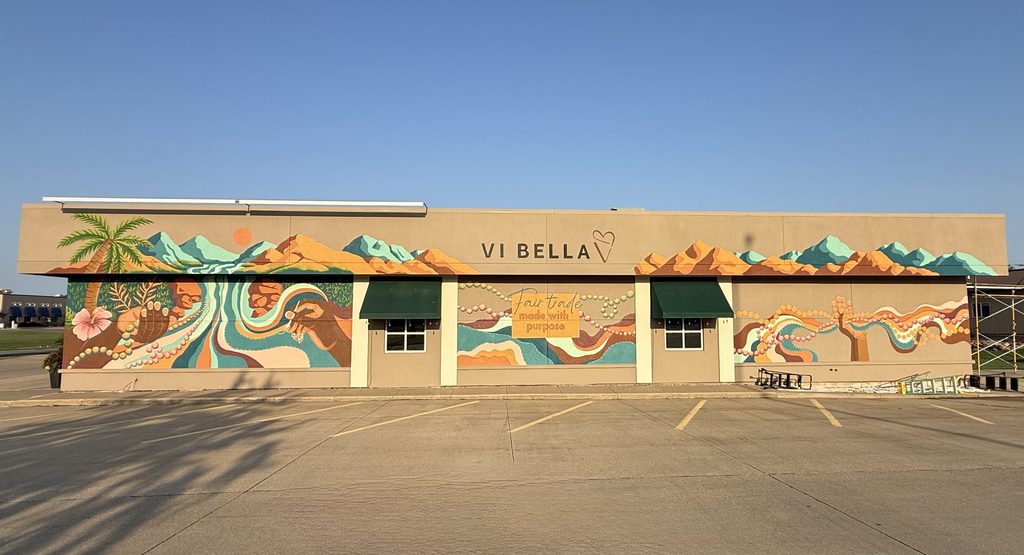






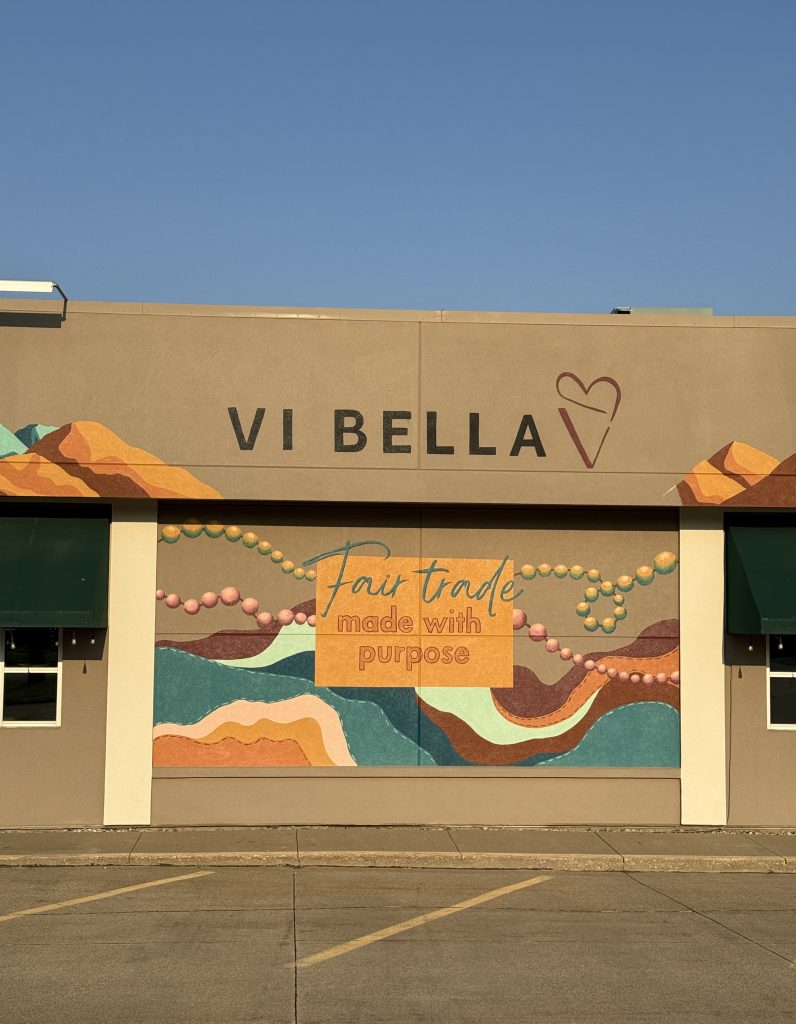
A colorful mural nearing completion at Vi Bella’s Sioux Center building is giving the nonprofit’s 15-year mission a new public face.
Photos taken Thursday, August 20, show artwork covering nearly the entire east wall. Mountains and tropical foliage stretch across the roofline, while colorful hands, beads, and fabric surround the words “Fair trade made with purpose.” Scaffolding and painting supplies remained at one end of the building with most of the artwork in place.
From One Trip to a 15-Year Mission
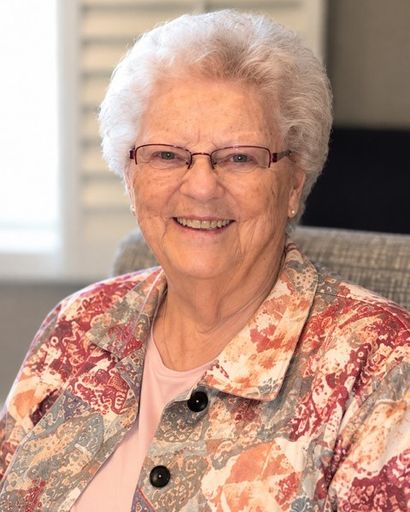
Julie Hulstein first traveled to Haiti on a mission trip in 2010. She saw deep poverty, children whose families could not afford school, and people who wanted to support themselves but had few opportunities to work.
After returning to Haiti a second time, Hulstein began considering whether creating jobs could provide a more lasting response.
“Could we be a part of just helping a few people with jobs? So in 2011, we started Vi Bella and … we’ve been going ever since trying to give jobs to people, and we have been successfully employing people with really life-changing jobs.”
Vi Bella’s United States-based team designs products and sends instructions and materials that are difficult to obtain in Haiti. Haitian artisans then produce jewelry, sewn goods, recycled-paper beads, and other items. Vi Bella also works with artisans who create metal art from discarded oil drums, along with baskets and pieces made from cow horn.
The products are shipped to Sioux Center before being sold to wholesale customers around the country, online and through Vi Bella’s local boutique. Hulstein said nearly 90 percent of the organization’s business comes through wholesale customers.
While Haiti continues to face poverty and instability, Hulstein said Vi Bella views its artisans through what they are capable of accomplishing.
“What our goal is, is to help people who are living in Haiti in tough situations, in poverty, to live the best life they can. They’re capable, they’re strong, they’re smart. And we just want to allow them to be the people that they’re able to be and contribute to their own communities and help their own families.”
A Building Designed to Tell the Story
After acquiring its Sioux Center building earlier this year, Vi Bella redesigned the boutique’s interior to better explain the connection between northwest Iowa and Haiti.
Displays and videos now teach visitors about Haitian culture, fair trade, and how the artisans create different products. Children can complete a free passport-style scavenger hunt, while bead-bar parties allow visitors to make their own jewelry using paper beads produced in Haiti.
Some of those beads begin as Northwest Iowa Review newspapers donated locally, shipped to Haiti and eventually returned as finished jewelry. Artisans have also created products using old hymnals donated by area churches.
The exterior mural became the next stage of the building’s transformation. Hulstein’s granddaughter, Celia, created the design.
“It is kind of an abstract design, but showcases some of the beautiful scenery of Haiti, some of the landscape and foliage of Haiti, but also shows some hands working with beads and fabric.”
Students from Sioux Center High School and MOC-Floyd Valley traced the design onto the wall with a projector after dark before beginning the painting process. Hulstein said most of the initial work was completed by four students, with additional students contributing as the project continued.
Although the original estimate called for the mural to be completed around the middle of August, scaffolding remained Thursday as the project approached completion.
For Hulstein, the artwork allows the building to introduce Vi Bella’s mission before anyone steps inside.
“Something that is really visible from the highway that attracts attention and piques people’s interest about what’s going on in our building and get a little more traffic.”
Local Support Creates a Wider Impact
Product sales help Vi Bella sustain its operations and pay artisans, while donations support needs that cannot always be covered through sales alone.
“We also use the donations to help send artisans’ kids to school. We’ve received grants to help our artisans who are amputees get new prosthetics. We have a significant number of deaf people working for us, so we’ve got a deaf interpreter on staff. And so donations help pay for those kinds of things and for accommodations in our workplaces and training initiatives, all different kinds of things.”
Hulstein said the economic impact also continues beyond the person receiving the original paycheck.
“When an artisan is paid well, they can buy food from local vendors. Those vendors can buy something from someone else. All of that income stays in these villages and communities and circulates several times. So we’ve noticed that it really does uplift the entire community.”
Vi Bella is planning a grand reopening and a separate fundraising dinner in October, although exact dates have not yet been announced.
The Vi Bella boutique is located at 24 19th Street Southwest in Sioux Center. It is open Tuesday through Friday from 10 a.m. to 4 p.m., with extended hours until 6 p.m. on Thursdays.