




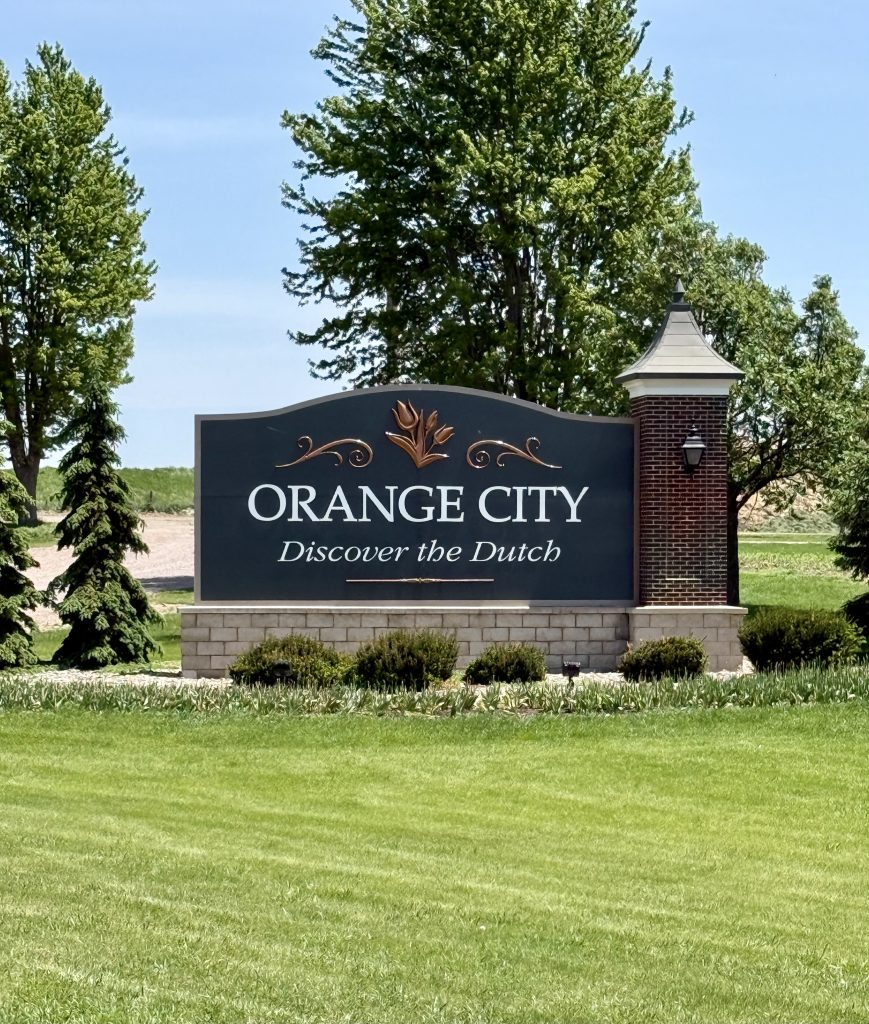
Orange City is moving closer to making 23 additional development lots available on property that once housed the city’s airport.
The City Council reviewed restrictive covenants for the Industrie Centrum West Second Addition during its August 17 meeting and set a September 8 public hearing on the proposed disposal of the city-owned property.
The second addition continues redevelopment already underway at the site. City Administrator Matt Van Schouwen said the planning process separates the property’s long-term layout from the city’s immediate construction schedule.
“At this point, the utility and street infrastructure will not be immediately constructed, but the lots have been platted out,” Van Schouwen said. “So we know for future what the development will look like.”
Four lots in the first addition are currently ready for sale. Van Schouwen expects several more lots to become available after the city completes the approval process.
Smaller Industrial and Mixed-Use Development
The property’s base zoning is industrial. Van Schouwen said Orange City’s existing development patterns helped shape the market the city hopes the subdivision will serve.
“We believe that these lots, they are somewhere on the order of an acre to an acre and a half,” Van Schouwen said. “So not large, large parcels for a large industry, but more for smaller shops, maybe some rental storage buildings, some smaller contractor-type uses.”
A mixed-use overlay would also permit residential development, ranging from single-family homes to denser multifamily housing. Van Schouwen offered one example of how a buyer could combine the two types of uses.
“The classic example would also be a ‘shouse,’ where it could be a large shed that you may operate out of, but then also have living quarters or a house attached to the building,” Van Schouwen said.
The city previously used a mixed-use overlay on one commercial property that already contained a residence. Officials expanded the concept after receiving several inquiries about combining homes with commercial or industrial uses.
Anyone building a residence in the new subdivision would face an additional disclosure requirement.
“The acknowledgment agreement lets people know that if they will be living in that area, there will be industrial activities happening,” Van Schouwen said. “There will be perhaps early morning noises or equipment startup. It could be some dust or some smells, some noise — things that you might typically see in an industrial setting.”
Lot Pricing and Interested Buyers
The proposed covenants establish different prices based on each parcel’s location and access.
“Overall, the pricing for the area will be in the three dollars per square foot price range,” Van Schouwen said. “Right now, lots 10 through 13 are the ones that will be for sale, and we’ve got some interested parties on those already.”
Lot 28 would be priced at $40,000 per acre because it does not have street access and would need to be combined with another purchased lot.
Lot 29 carries a proposed price of one dollar. Van Schouwen explained the unusual figure.
“We will be deeding it over to one of our industries who currently has a hangar building that is now storage that’s attached to their building already,” Van Schouwen said. “We are essentially giving the land underneath the existing building to them. So that is why that is a dollar or basically we’re transferring that property to them.”
The hangar was previously used to store the company’s corporate airplane and is now used for storage.
Other Council Business
The council also accepted the completed St. Paul Avenue sidewalk project and approved its final payment and closeout documents.
The approximately half-mile trail runs along the east side of St. Paul Avenue between the Highway 10 roundabout and Second Street Southeast. The project was substantially completed last summer, but several remaining punch-list items delayed its formal acceptance.
The final cost was $318,261, approximately four percent below the original bid. The trail provides pedestrians and bicyclists with an alternative to traveling on the heavily used, rural-style roadway.
The council also approved the hiring of Seth De Jong as Orange City’s new parks supervisor. De Jong grew up in Orange City, graduated from Northwest Iowa Community College’s carpentry program, and spent the past nine years working for a local homebuilder.
De Jong will work under the city’s parks and recreation director, helping oversee park maintenance, mowing, tree trimming, equipment, seasonal parks, and employees.