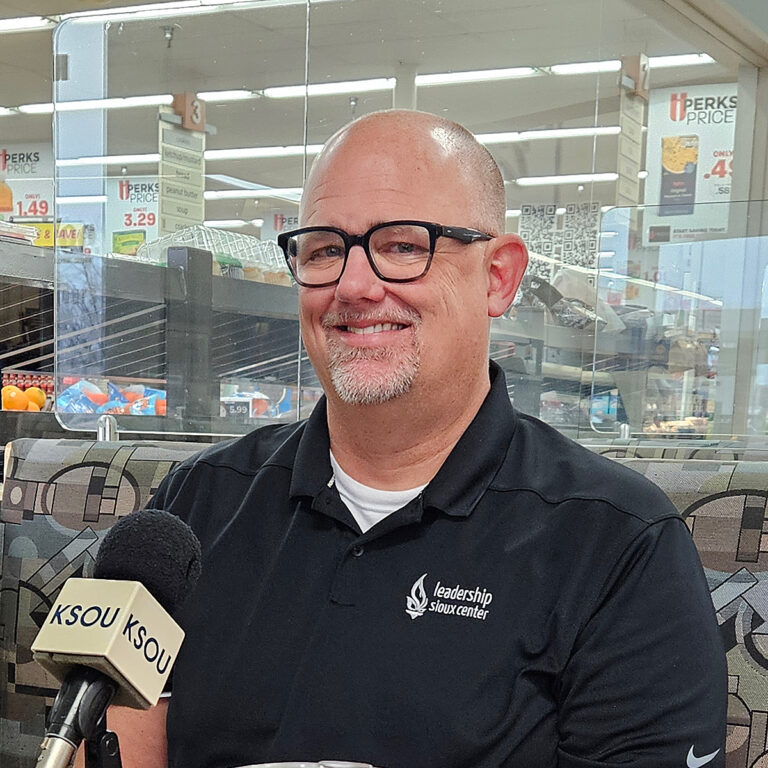








The two candidates seeking to replace Rob Sand as Iowa’s state auditor offered different views on a law changing the office’s access to information during interviews this week on Sioux County Radio’s Daily Grind.
Democrat Taylor Wettach criticized Republican Chris Cournoyer’s support for the 2023 legislation, saying it made protecting taxpayer money more difficult. Cournoyer defended her vote, saying the changes established boundaries for audits and protected Iowans’ private information.
Both candidates also outlined plans to help local governments and improve the office’s work ahead of the November 3 election. Sand is running for governor.
Candidates Bring Legal, Technology Backgrounds
Wettach is a Muscatine attorney and seventh-generation Iowan whose work has focused on financial and legal matters. He said his experience includes reviewing multibillion-dollar financial issues and working with auditors and accountants.
Cournoyer, Iowa’s lieutenant governor, lives in LeClaire and has a computer science degree and approximately 30 years of technology experience. She worked for Andersen Consulting before starting a website development business. Her public service includes serving on a local school board and six years in the Iowa Senate.
Both said the auditor should provide independent oversight of taxpayer money, regardless of which party controls state government.
Different Views on the 2023 Law
Wettach said the auditor needs access to information necessary to complete audits and should resist political efforts to interfere with that work. He identified Cournoyer’s support for the 2023 law as one reason he entered the race.
The 2023 law, Senate File 478, limits the auditor’s access to certain sensitive records, including medical and student information, with exceptions for auditing standards, state or federal requirements, and suspected theft or embezzlement. It also routes disputes between the auditor and other state executive branch offices or agencies through binding arbitration rather than the courts. Each side appoints one member of the three-person panel, with the governor selecting the third.
“One of the big reasons why I thought it was important to get into this race was that my opponent, she had been one of the folks that supported that law,” Wettach said. “Thanks to that law, it has become more difficult for this office to protect folks tax money and has become more difficult for this office to go against bad actors and corrupt politicians.”
Cournoyer confirmed that she supported the legislation while serving in the Iowa Senate. She said her concerns included requests for health care and student information, along with how audits were initiated and their scope established.
“So we put some guardrails in there. Now, if there is a reason why that data needs to be collected, then make a case for it,” Cournoyer said. “But otherwise, if it’s not within the scope of the audit, that kind of information should not be collected on our citizens, it’s just not right.”
Helping Local Governments and Improving Audits
Wettach said smaller communities may lack the staffing, technology, and other resources available to larger cities. He wants the auditor’s office to provide more assistance before financial problems develop, working with the Legislature to support those efforts.
“And if you really dig into it, if you look at the numbers, it’s a lot less expensive and a lot more effective to provide that sort of support on the front end than just waiting to find out that you have a problem down the road and fixing it,” Wettach said.
He also supports continuing Sand’s Public Innovations and Efficiencies (PIE) program and providing technology to assist the office’s staff. He cautioned that efforts to improve efficiency should preserve the resources and independence employees need to do their jobs.
Cournoyer said modern financial auditing software could help the office complete audits more quickly and examine information more thoroughly. She said artificial intelligence should assist employees, with people responsible for checking its work.
“But we always need the human in the loop and the expertise of our human CPAs to be able to really dig into those complex cases and see those nuances that technology doesn’t always catch,” Cournoyer said.
She also proposed additional training and resources for local officials, including online learning opportunities and tools to make government finances easier for the public to follow. Asked about the PIE program, Cournoyer said she would consider continuing or expanding efforts that help governments operate more efficiently.
The candidates appeared in separate Daily Grind interviews as part of Sioux County Radio’s political interview series.