







Well over 100 people gathered at Rock Valley’s Parkview Event Center Tuesday night to hear about a possible 25-megawatt data center. By the time residents took the microphone, one of their first questions was what the project would do for people who already live there. Another was how much had already been decided.
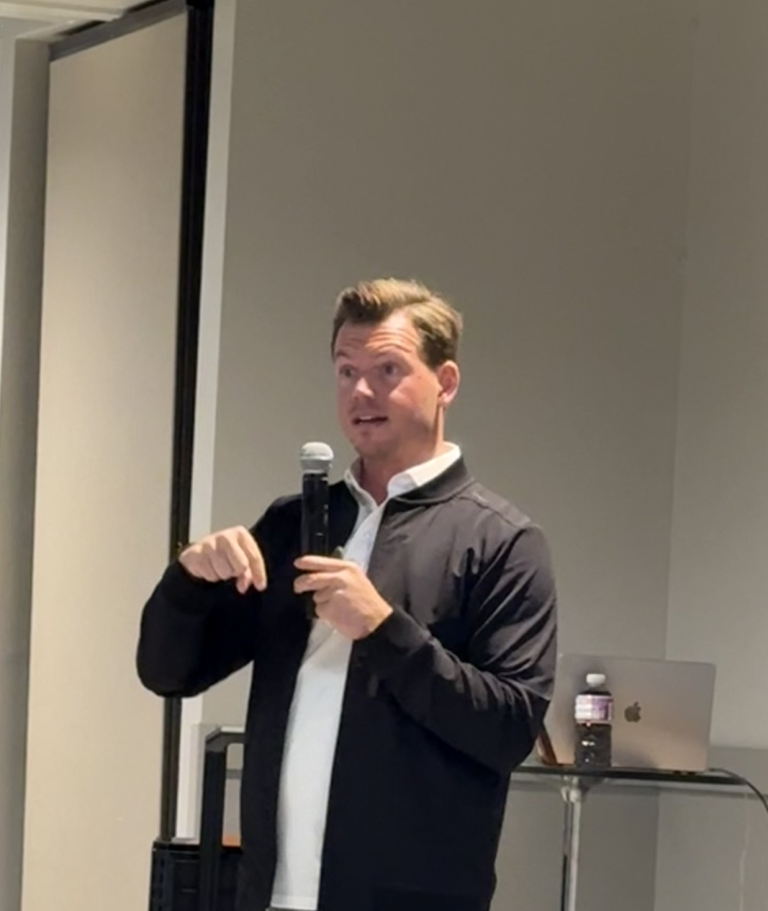
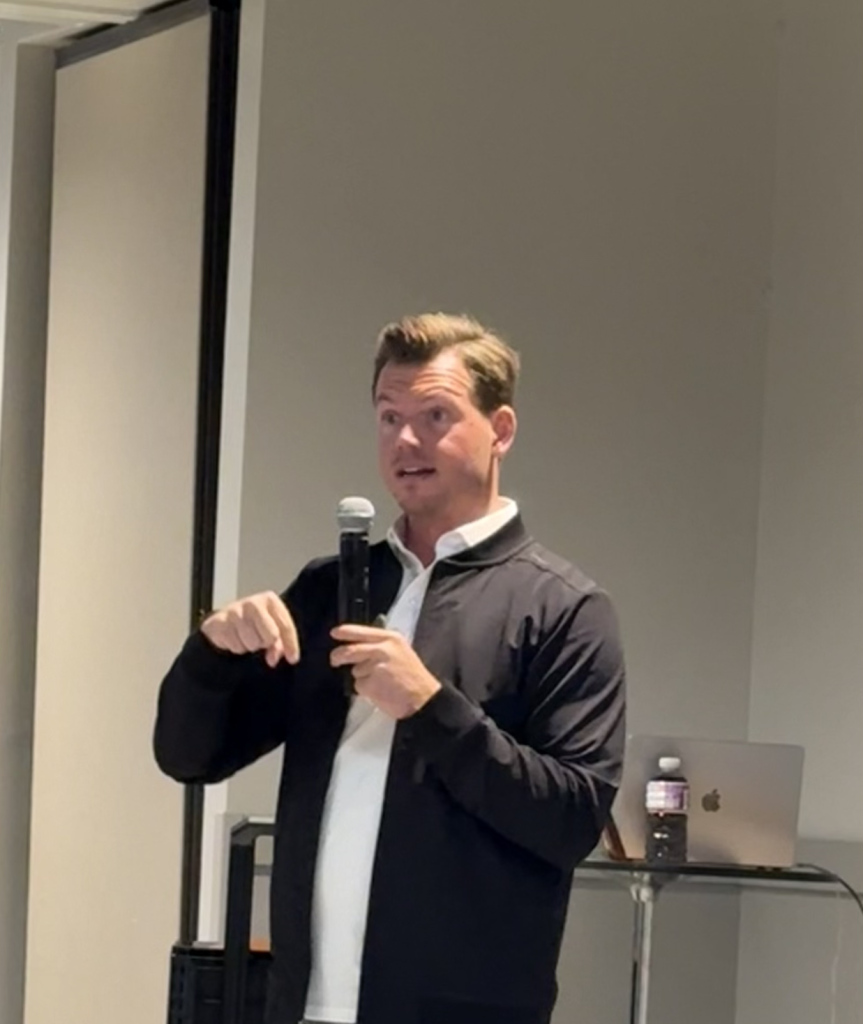
Rock Valley Economic Development Director Adam Rosman opened the November 24th meeting, then turned it over to PathOne Data Centers co-owner Gyles Uhlenhopp for a 30-minute presentation. The site under consideration is in Rock Ridge Business Park, behind Frosted Frog and near an electrical substation. Rosman said the economic development board wants to keep the highway frontage available for restaurants and retail.
Rock Valley Economic Development and PathOne have signed a letter of intent. The board still owns the land, and PathOne has yet to secure a tenant. One resident questioned why the letter was signed before the public meeting and asked whether residents could petition for a say in the decision.
“We don’t ask if you want another grocery store, ask if you want another McDonald’s. That’s part of what we do is recruit businesses and figure out if they’re going to fit here,” Rosman said.
Rosman said the board followed its usual process for talking with a prospective business. He also acknowledged that residents could have heard about the proposal in a better way.
What the Project Could Mean for Rock Valley
A resident asked how much the city and its taxpayers stood to gain. Rosman said conversations with the assessor produced a preliminary estimate of about $30 million in taxable value. At that valuation, he estimated the facility could generate about $400,000 a year for the city and roughly $500,000 for the school district. The city would offer no tax incentives, he said.
Rosman pointed to what the 2024 flood is still costing Rock Valley as damaged homes come down.
“Those houses are going to come down and will never be rebuilt and never revalued. So you will lose 138 taxable values from our budget line. There’s an opportunity here to help support that,” he said.
PathOne’s presentation put the cost of building a 25-megawatt facility at $250 million to $375 million. The company projected 15 to 20 permanent jobs with an average salary of $115,000. Rosman said that a smaller workforce is part of the appeal in a town where machine shops already have openings. He also sees potential customers among local manufacturers, farms using precision equipment, financial institutions, and the hospital.
One attendee spoke in favor of having that computing capacity close to home. “When we look just a few years into the future, manufacturing is going to require increasing amounts of data to be processed. And the closer we can do that to home, the better it’s going to be.”
What Another Large Customer Could Mean for Electric Rates
One resident asked whether a data center would use up electrical capacity that other businesses might need. North West Rural Electric Cooperative CEO Lyle Korver said the co-op built the east-side substation with room to expand. If the project moves ahead, Korver said PathOne would pay several million dollars up front for transmission upgrades.
“Sales growth has been very good for our cooperative. Our rates are quite a bit lower than they would have been had we not had the manufacturing growth in Rock Valley,” Korver said.
Asked about rates again later, Rosman said co-op members should still expect increases. Selling more power through infrastructure members already pay for could slow those increases over time. That discussion applies to North West REC, which serves the business park. MidAmerican Energy serves most Rock Valley households.
What Neighbors Could Hear
Uhlenhopp gave Rock Valley the same sound target he described at the August meeting in Hull about PathOne’s separate Perkins Corner proposal: under 65 decibels at the property line. Tuesday night, he went into more detail about how the company would try to meet it.
Uhlenhopp said PathOne would use large, slow-turning cooling fans and vary their speed so neighbors would find it harder to pick out a steady tone. The design also calls for acoustic panels beside and above the equipment and earthen berms around the facility.
“If you were to buy a car without a muffler, it’s going to be loud. You’re paying more for a piece of equipment that is higher quality and keeps sound down,” he said.
Residents Ask How Health Effects Would Be Tracked
One woman said a claim she had read online about cancer risk prompted her to speak up. “I have kids and grandkids that will be living fairly close to where you’re proposing to build,” she said.
Federal registry data put Iowa third among the states for its rate of new cancer cases from 2019 through 2023, behind Kentucky and West Virginia. Iowa’s age-adjusted rate was about 504 cases per 100,000 residents each year, compared with 453 nationwide. Those figures cover statewide diagnoses in the years before the Rock Valley proposal.
A Rock Valley family physician raised a separate concern about exhaust from diesel backup generators and what exposure could mean for patients who already have breathing problems.
“Have you considered or do you already have some ideas of doing some health impact assessments with your data center and how it’s affecting the health of the community?” she asked.
Uhlenhopp said a health assessment would be part of the process. He said diesel was the likeliest choice for backup power, though that decision would depend on who leases the space.
“Some tenants want and require battery storage. Some require diesel generators, some require hydrogen generators. It depends on what the tenants’ requests are,” he said.
The physician followed up by asking what the community would do if doctors began seeing more flare-ups among patients with COPD. Rosman said he wanted health tracking included in discussions about the operating agreement. Who would conduct an assessment and when it would begin remain open questions.
What Still Has to Happen
Rosman said the city’s legal team reviewed the proposal and concluded it fits the site’s existing industrial zoning. Rock Valley and PathOne are working on an operating agreement that would set sound levels, cap water use, and spell out what happens if the facility closes. PathOne’s presentation estimated its 25-megawatt model would use between 875,000 and 1.7 million gallons of water a year.
The economic development board would have to approve a land sale. Uhlenhopp said PathOne could then market the site, sign a tenant, and secure financing.
“A facility like this is probably a 12-month build process. So it depends on once we get that tenant signed and the money wired to go start building,” he said.
PathOne’s proposal at Perkins Corner, southwest of Hull, also calls for up to 25 megawatts and is further along. Uhlenhopp previously told Sioux County Radio the company had submitted its conditional-use permit application and anticipated county review on December 10th. In Estherville, where PathOne has also expressed interest, KUOO reported the city council gave first reading November 16th to a proposed 25-megawatt limit and referred sound limits back to its planning commission.
In Rock Valley, Uhlenhopp invited residents to apply for a community advisory council. Rosman said another public meeting was possible, but no date had been set. You can watch the livestream by clicking here.