







Residents sought clearer and more specific answers from PathOne Data Centers during a nearly three-hour informational meeting Monday night.
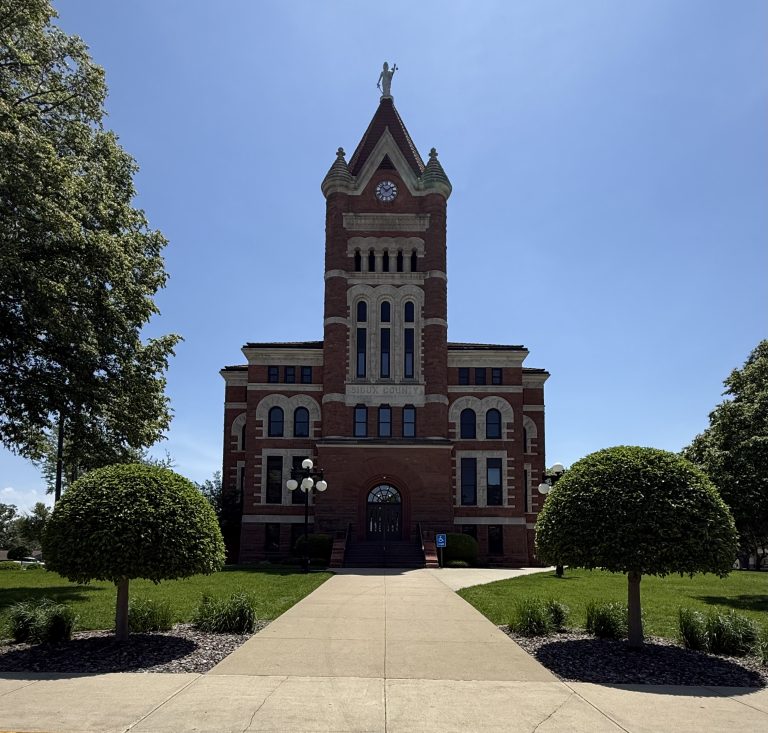
The meeting was held in the Sioux County Courthouse’s main courtroom, where attendance had been capped at 150 because of room capacity.
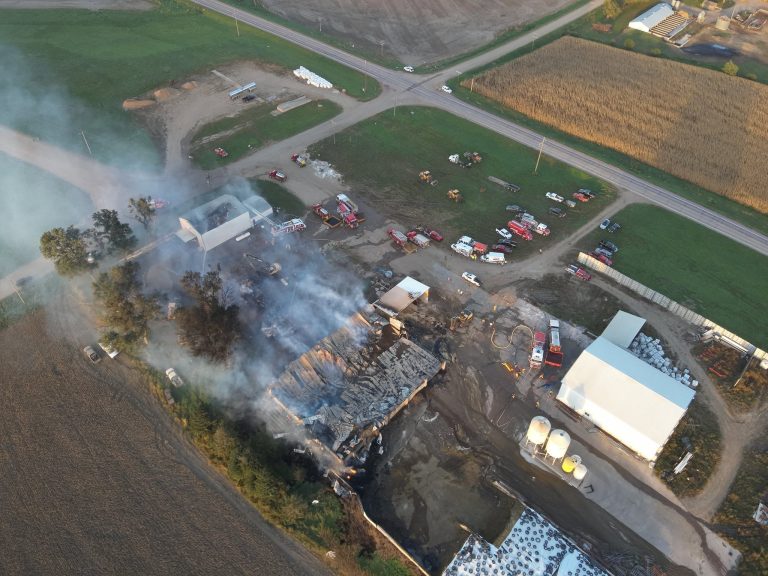
PathOne is considering redeveloping the former Bison Renewable Energy property along 330th Street near Hull, just south of the Highway 18 and 75 intersection also known as Perkins Corner.
Supervisor Carl Vande Weerd emphasized that PathOne organized the meeting, while the county provided the venue. It was not a formal county hearing, and Sioux County has not approved a data center at the property.
PathOne Presents Smaller-Scale Concept
PathOne said the facility could begin with a 10-megawatt data center occupying approximately 40,000 square feet. The company builds in 10-megawatt blocks but is asking Sioux County to limit any project at the site to no more than 25 megawatts.
A fully developed site would occupy fewer than 30 acres and represent an estimated investment of between $100 million and $375 million, according to company projections.
PathOne representative Gyles Uhlenhopp described the concept as an “edge” data center and contrasted it with hyperscale developments that can occupy hundreds of acres and consume several hundred megawatts of electricity.
“The right way is the only way,” Uhlenhopp said. “If we can’t do it that way, we don’t want to do this at all.”
PathOne said the facility could serve financial institutions, health care systems, manufacturers, or other organizations that use cloud computing and artificial intelligence.
The company does not currently have a defined tenant for the Sioux County concept. PathOne had previously said it had a prospective end user, but that the arrangement changed after PathOne learned about the county’s data center moratorium.
PathOne CEO Jim DiNoia also acknowledged that no data center has yet been completed under the PathOne name. Representatives said members of the company’s team have decades of experience working on facilities through other companies.
Residents Question Water, Noise and Accountability
Much of Monday’s meeting was devoted to audience questions.
Residents repeatedly asked for project-specific figures and enforceable commitments rather than estimates that could change depending on the facility’s final design or tenant.
“If you want this project to happen, it’s got to be black and white with no gray area or you’re not going to convince us,” one resident said.
Water consumption remained one of the primary concerns.
PathOne said a 10-megawatt facility would consume approximately 350,000 to 700,000 gallons annually. A full 25-megawatt development would use an estimated 875,000 to 1.7 million gallons per year.
Representatives said the facility would use a closed-loop water-and-glycol cooling system that recirculates fluid rather than continuously consuming water through evaporation. They clarified that the patented technology associated with the system belongs to an engineering partner.
Residents asked where the cooling fluid would go when it needed to be replaced, whether nearby wells could be affected, and whether penalties would apply if the facility exceeded its projected consumption.
PathOne said used fluid would be transported off-site for processing rather than discharged into a local wastewater system or onto the property. Representatives also agreed to conduct an environmental impact study after an audience member requested a full accounting of what would enter and leave the facility.
Other questions involved possible low-frequency noise and its effects on people, livestock and wildlife. A PathOne representative acknowledged that the company did not have a complete answer and said specialists would need to be consulted.
PathOne said its design goal would keep sound below 55 decibels at the property line. Representatives said independent testing would establish existing noise levels and measure the completed facility.
Construction, Electricity and Future Ownership
A nearby resident asked how long construction would last and whether evening work would be audible from his property.
PathOne estimated the construction process would take approximately 12 to 14 months. Representatives said work hours and truck routes could be addressed through the permitting process. The company also said it would pay for road, fence, or other property damage caused by construction.
Residents asked what would happen if PathOne eventually sold the facility. Company representatives said operational requirements could be attached to the property so they would continue to apply to a future owner.
The project would also require additional electrical infrastructure.
A North West Rural Electric Cooperative representative compared the demand from a 10-megawatt facility to the electrical load of one of the area’s larger ethanol plants.
Audience members questioned whether that additional demand could strain the regional grid. The cooperative representative said the facility’s steady electrical use and possible participation in an emergency load-shedding plan could provide some advantages. PathOne said backup generators could allow parts of the facility to disconnect from the grid during an emergency.
PathOne said it would pay for the electrical and fiber infrastructure required by its development.
Taxes and Employment
PathOne said it would request no local property-tax abatement and would pay full property taxes on the taxable portion of the development.
The company projected that the facility could become one of Sioux County’s largest property taxpayers, although the final amount would depend on the project’s assessed value and applicable tax treatment.
PathOne also acknowledged that the development would not create a large number of permanent positions. The company estimates a completed facility would support approximately 10 to 20 full-time jobs, along with temporary construction employment.
Representatives said they would seek local contractors when possible, although specialized portions of the project could require firms with data-center experience.
County Officials Clarify the Process
Sioux County officials revisited the PathOne meeting during Tuesday morning’s Board of Supervisors meeting.
Zoning Director Shane Walter said Monday’s discussion provided an opportunity for residents to be heard.
“People got a chance to express their opinion and ask questions,” Walter said.
Walter made a similar point Monday night when he explained that adopting data-center regulations would not automatically approve PathOne’s concept. Any eventual application would still be subject to county review and public hearings.
Board Chairman Jerry Muilenburg said a small county working group is developing preliminary suggestions for potential data-center regulations. Its work will not become county policy on its own.
“Whatever these four people decide, that isn’t the final rules,” Muilenburg said. “Then it goes to the zoning commission and they have to read it over and decide if they like it or not.”
Any recommended regulations would ultimately advance to the Board of Supervisors for consideration.
Supervisors also clarified that PathOne’s proposed Community Advisory Council is separate from the county working group. The company-organized council could provide input but would have no authority to write or approve county regulations.
Sioux County’s one-year moratorium on new data centers and industrial battery-storage facilities remains in effect in the county’s unincorporated areas.
The moratorium, put into place on June 16 of this year, would have to be lifted by the Board of Supervisors or allowed to expire before a data center could advance through the county approval process. Supervisors took no action Tuesday to lift it.
Site Visits and Additional Meetings
PathOne will allow residents to visit the potential project site at 3071 330th St. during the following times:
- Wednesday, Aug. 12, from 3 to 6 p.m.
- Thursday, Aug. 13, from 3 to 6 p.m.
- Friday, Aug. 14, from 10 a.m. to 2 p.m.
PathOne also plans additional in-person meetings and an online webinar. The company says it will publish written answers to questions raised during Monday’s meeting on its Sioux County project page.