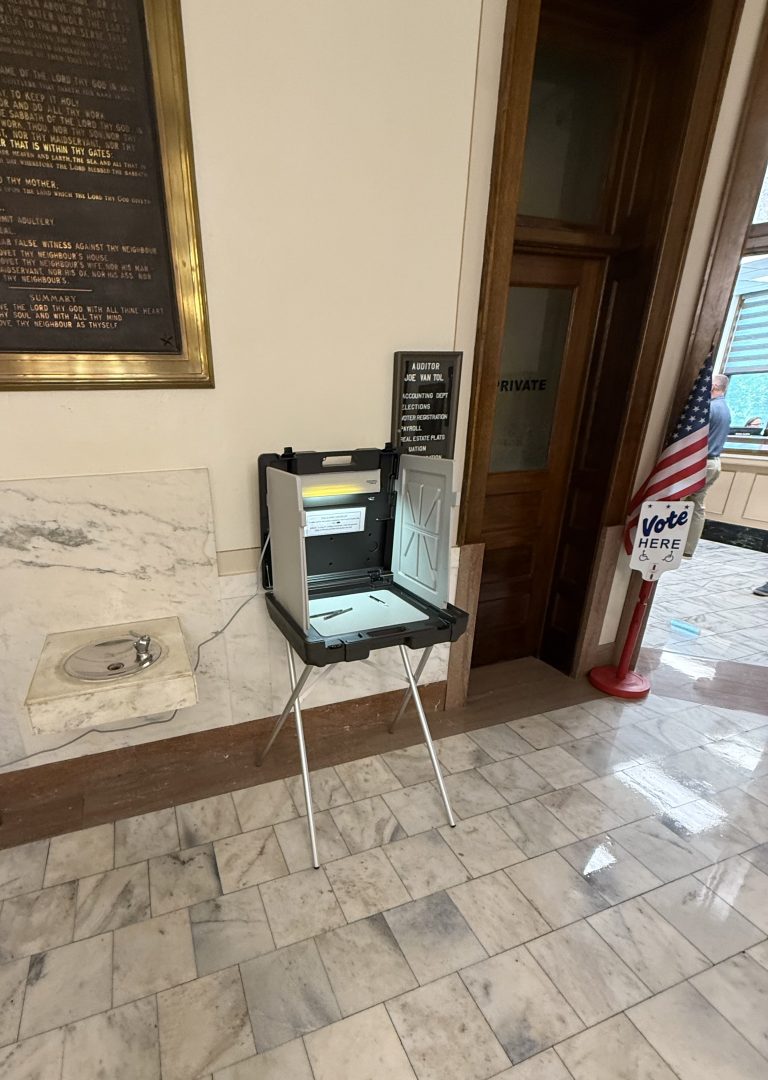








Voters in Sioux County and across Iowa will decide November 3 whether raising certain state tax rates should require a larger majority of lawmakers.
Amendment 1 would change the Iowa Constitution to require approval from at least two-thirds of the elected members in both the Iowa House and Senate for specified tax legislation.
The amendment would not itself raise or lower anyone’s taxes. Instead, it would change the number of legislative votes needed to increase certain tax rates or establish certain new taxes.
What Would Change?
Under the proposal, bills increasing individual or corporate income tax rates would require at least 67 votes in the 100-member House and 34 votes in the 50-member Senate.
Currently, those bills require a simple majority: 51 representatives and 26 senators.
The two-thirds requirement would also cover increases in other tax rates based on income or legal and special reserves, along with bills establishing new state taxes on those categories.
The threshold would be based on the members elected to each chamber, rather than simply the number present for a vote.
What it would NOT do
Amendment 1 would not apply the higher voting requirement to every tax change.
It would not require a two-thirds vote simply to lower income tax rates, and it would not establish that requirement for sales or property tax rate increases. The proposal also expressly excludes taxes imposed at a local government’s option.
Approval would not freeze the entire tax code or prevent future income tax increases. Covered increases could still pass if they received the required legislative support.
Where do Republicans and Democrats Stand?
Ballotpedia lists the Republican Party of Iowa among the amendment’s supporters and the Iowa Democratic Party among its opponents.
Supporters argue the higher threshold would protect taxpayers by requiring broader legislative agreement before increasing income tax rates.
Iowans for Tax Relief Foundation, a supporter, argues that making tax increases more difficult would encourage lawmakers to review spending and consider alternatives before seeking additional revenue, according to Ballotpedia.
Opponents argue the requirement would restrict lawmakers’ ability to respond to changing budget needs. Ballotpedia lists Common Good Iowa and the League of Women Voters of Iowa among organizations opposing the amendment.
Those are general party and organizational positions; individual voters may hold different views.
A Local Opposing View
Garth Van Donselaar, the independent candidate for Iowa House District 4, discussed his opposition during an interview on Sioux County Radio’s The Daily Grind.
Van Donselaar said he believes Iowa’s tax system still needs changes and questioned adding another hurdle for lawmakers.
“And so basically my take on it is it just makes change harder. And I think there’s clearly an appetite for change right now and clearly an appetite for making adjustments to the tax structure.”
House District 4 includes all of Lyon County and portions of Sioux County. Van Donselaar faces the incumbent, Republican Candidate Skyler Wheeler, in the election tomorrow.
What Does a Yes or No Vote Mean?
A yes vote supports adding the two-thirds requirement to the Iowa Constitution.
A no vote opposes the amendment and would leave the existing legislative vote requirement in place.
The proposal also sets a one-year deadline for lawsuits challenging whether a bill was properly enacted under the new requirement.
Lawmakers approved the proposed amendment in 2024 and 2026, sending it to voters for a decision in the November 3 general election.