






The multi-phase construction and renovation project at Sheldon High School is entering its final stretch.
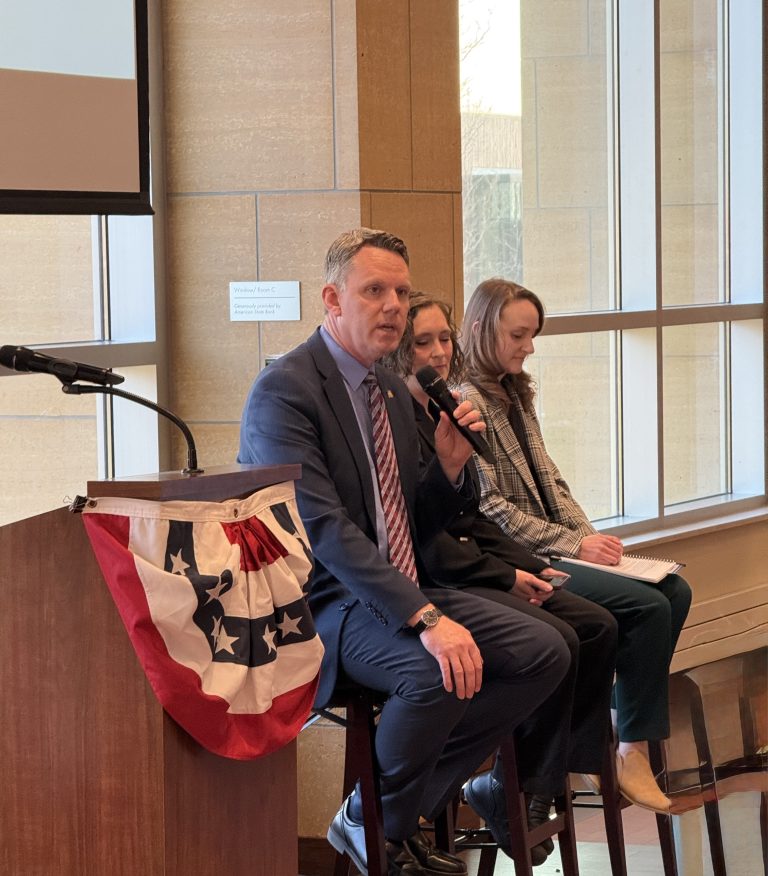
Sheldon Community School District Superintendent Cory Myer says the work was driven in part by aging infrastructure, but also by the need to modernize the learning environment for today’s students.
Phase One: Additions and Expanded Learning Spaces
Phase one focused on building additions to the east and west sides of the high school. The project added a new weight room and wrestling room, along with additional classroom space. Specialty areas were also upgraded or added, including family and consumer sciences, band, choir, and art spaces.
Those additions created new learning environments while also relieving pressure on older portions of the building.
Phase Two: Secure Entry and Office Renovation
Phase two transformed the middle section of the building, converting what used to be the library into a new main office space.
Myer says that change significantly improved accessibility and security.
The renovated area now includes a collaborative meeting space and a conference room used regularly by staff and community members.
Phase Three: Continued Updates
While earlier phases focused on additions and the central portion of the building, phase three continued modernization efforts in other instructional areas, updating spaces to better serve students and staff.
Phase Four: Final Renovations Underway
The fourth and final phase centers on renovating both the northeast and northwest portions of the original building.
The northeast corner includes the locker room area near the gym. During construction, only one locker room has remained operational — requiring staff and students to get creative during the winter sports season.
Meanwhile, the northwest section — formerly science and math classrooms — is being remodeled into updated instructional space.
All of that work is scheduled to be finished this summer.
Designed for the Next 50 Years
Beyond infrastructure upgrades, Myer says the project was also shaped by changes in education over the past half-century.
He notes that schools today serve a broader range of students and provide services and supports that simply weren’t part of the educational landscape 50 years ago. Accessibility improvements — particularly compliance with the Americans with Disabilities Act — were another major factor in the redesign. Features once considered standard are now recognized as barriers, and the new layout removes many of those obstacles.
With the final phase nearing completion, district leaders say the updated building will be ready to serve students for decades to come.
This story (and featured photo) is courtesy of fellow Community First Broadcasting station KIWA Radio